


Waste Minimization
Basic Approach
The Toyota Boshoku group verifies activities to reduce waste at each plant and deploys best practices across the organization such as reducing the defect rate and enhancing the recycling rate for components. We are working toward our target of reducing global waste per basic unit by 14% from the fiscal 2012 level by fiscal 2026. In addition, in the 2030 Environmental Action Plan, we have changed the base year to fiscal 2020, and have set a 2030 Target that is at or below the level of waste per basic unit in fiscal 2020. We are also working on design and production preparations that realize a reduction in material loss rate.
Waste Minimization
As part of Toyota Boshoku group efforts to minimize production waste and contribute to the realization of a recycling-based society, we are focusing both on minimizing waste during the production stage—such as by reducing the rate of defects, as well as by making improvements to yield—and on pushing forward with such activities as our upcycling initiatives. For example, the use of waste materials from car seat covers in the production of new products.
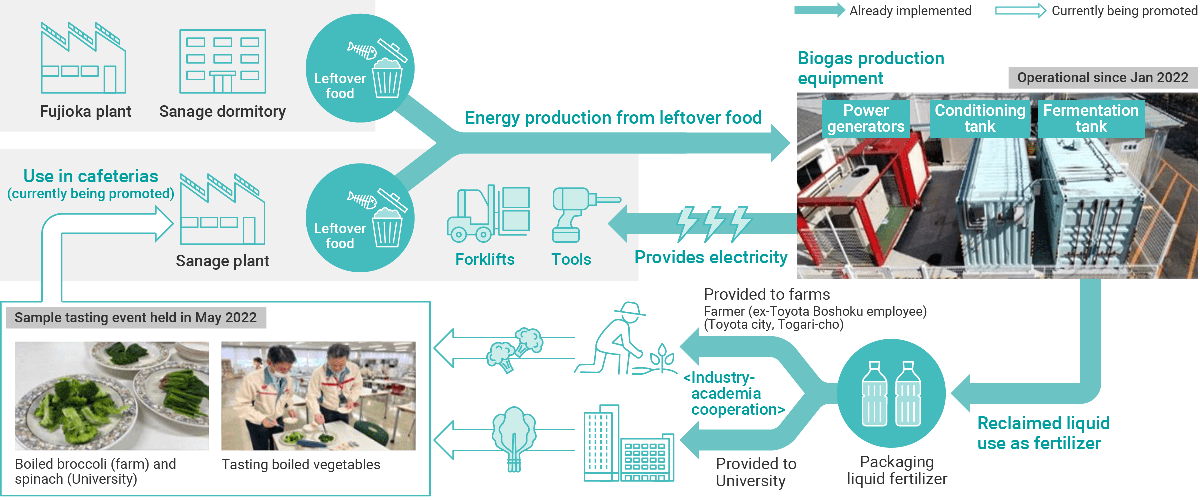
Food Waste Initiatives: Generating Biogas from Leftover Food
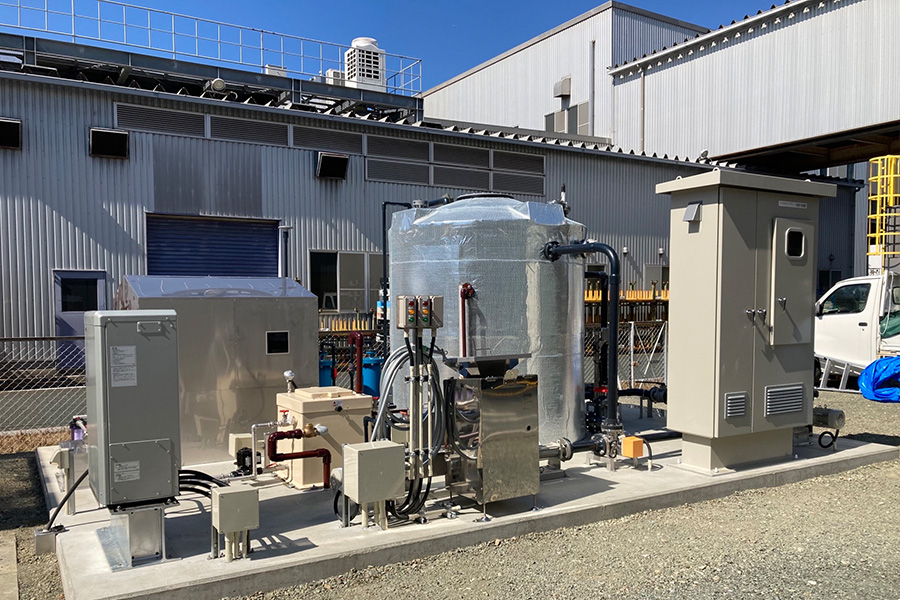
Leftover food from cafeterias at Toyota Boshoku's Sanage, Fujioka, Toyohashi-Kita, Toyohashi-Minami, and Toyohashi-Higashi plants, as well as the Sanage dormitory, is converted into biogas, which is used as renewable energy. Electricity generated by the biogas power generation facility is used for charging forklift and tool batteries. Additionally, liquid (liquid fertilizer) reclaimed from the biogas production process is distributed within the local community for use.
Food recycling
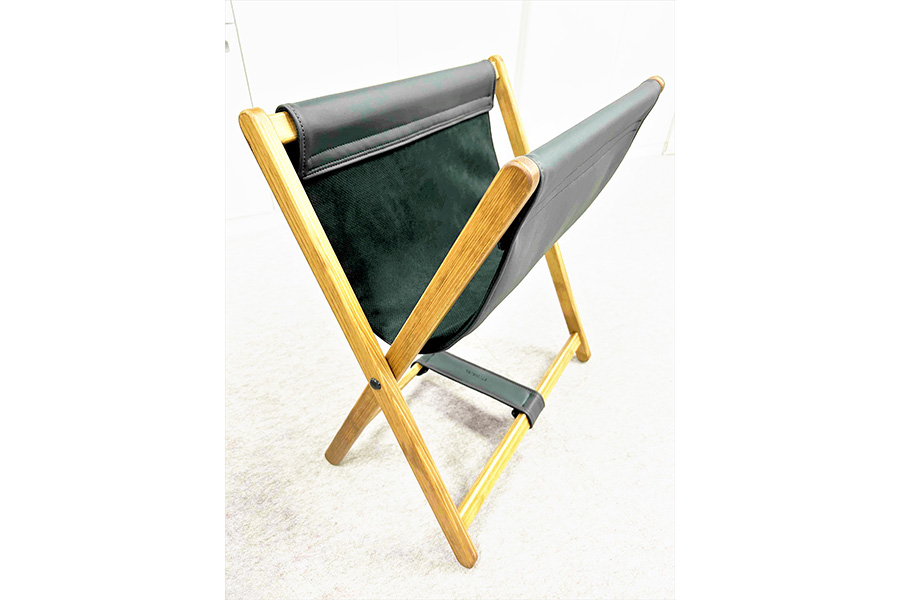
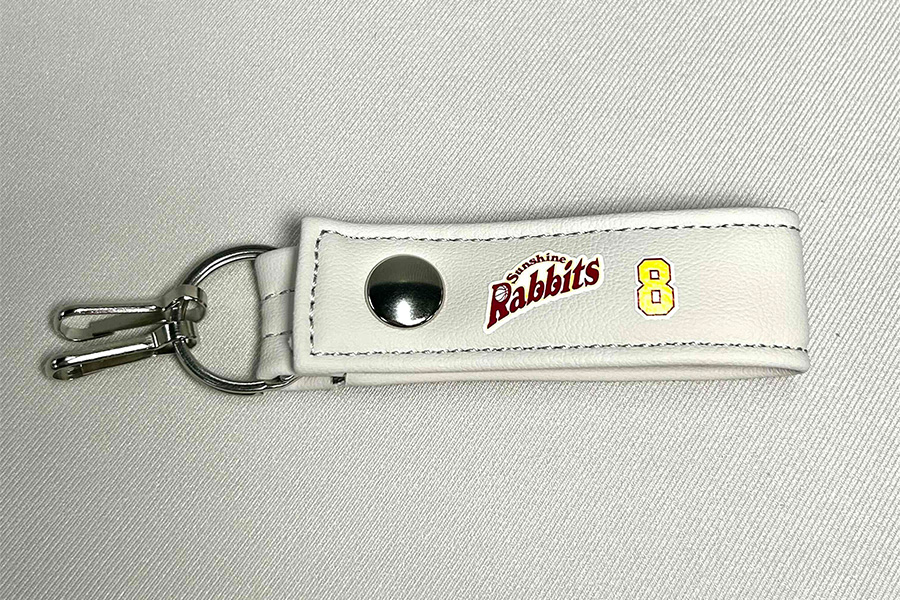
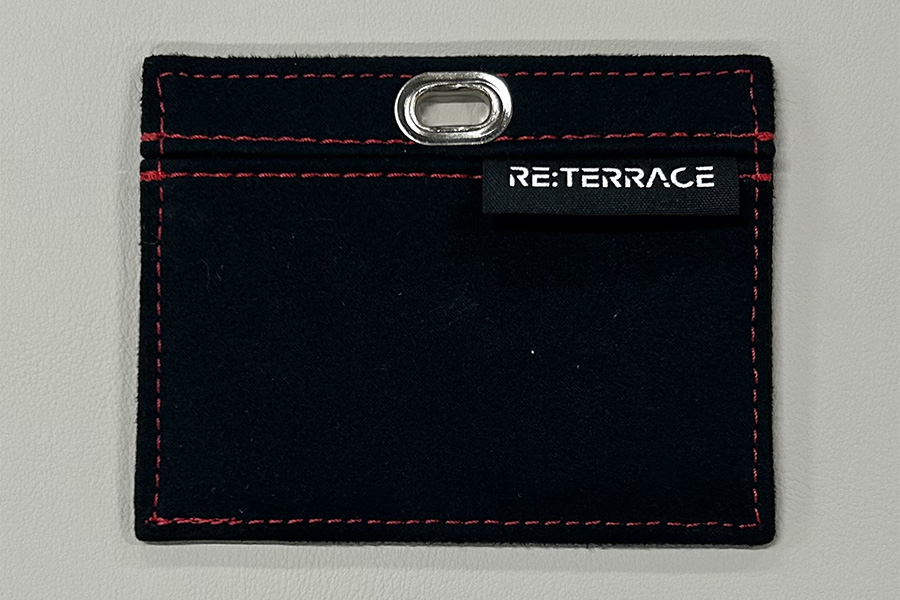
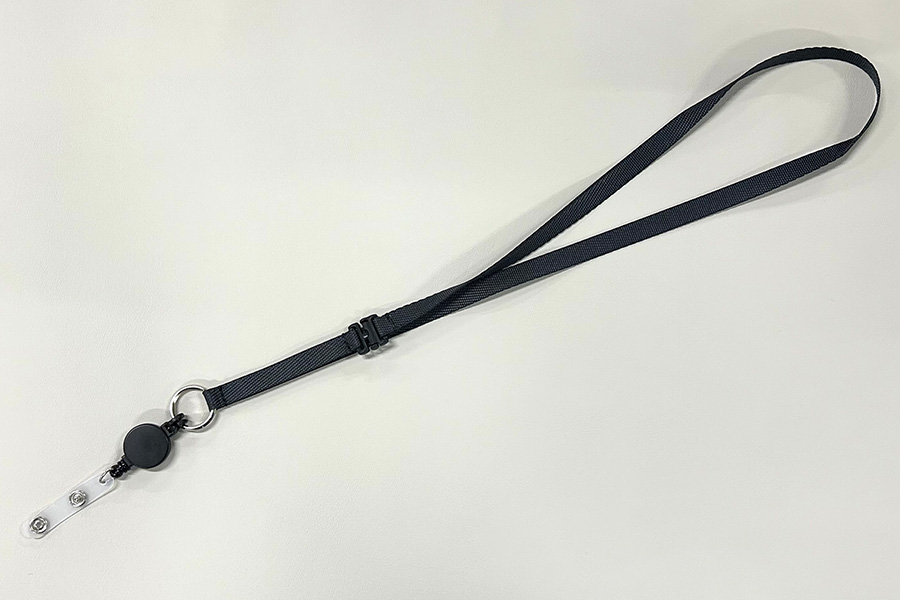
Initiatives to Reduce Waste by Upcycling* Surplus Materials from Seat Covers
During production, seat cover materials are cut into shape, and some pieces are inevitably left over as waste. Similarly, when a line of seat covers is discontinued, some surplus stock may remain. In order to prevent waste and make full use of these high-quality materials, we are promoting a project to upcycle them into new products.
Seat cover materials are highly functional, meeting quality standards including being pleasant to touch, with flame resistance, light-fastness, and wear resistance.
As the first step of this project, we partnered with the Japanese baseball team the Chunichi Dragons to create a line of seat cushions based on their mascot Doala.
In fiscal 2024, we trademarked the brand name RE:TERRACE for this upcycling project, and in fiscal 2025, we expanded our products to include storage baskets, key chains, ID card holders, and neck straps.
In the future, we will continue working towards carbon neutrality by making further use of waste and surplus materials from not just seat covers, but door trims, seat belts, and more.
- The act of taking something no longer in use, considering its potential, and reusing it for other purposes
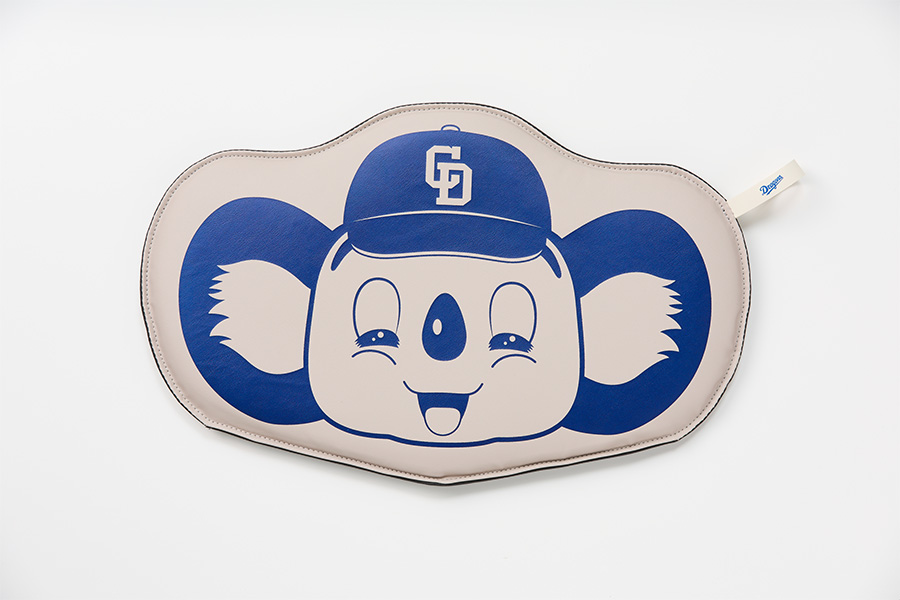
© Chunichi Dragons