


Sustainable Resource Circulation
Basic Approach
The Toyota Boshoku group will contribute to curbing the depletion of fossil fuel and mineral resources by promoting easy-to-disassemble and recyclable designs, recycling materials through the development of recycling technologies, and replacing materials with plant-derived and other materials.
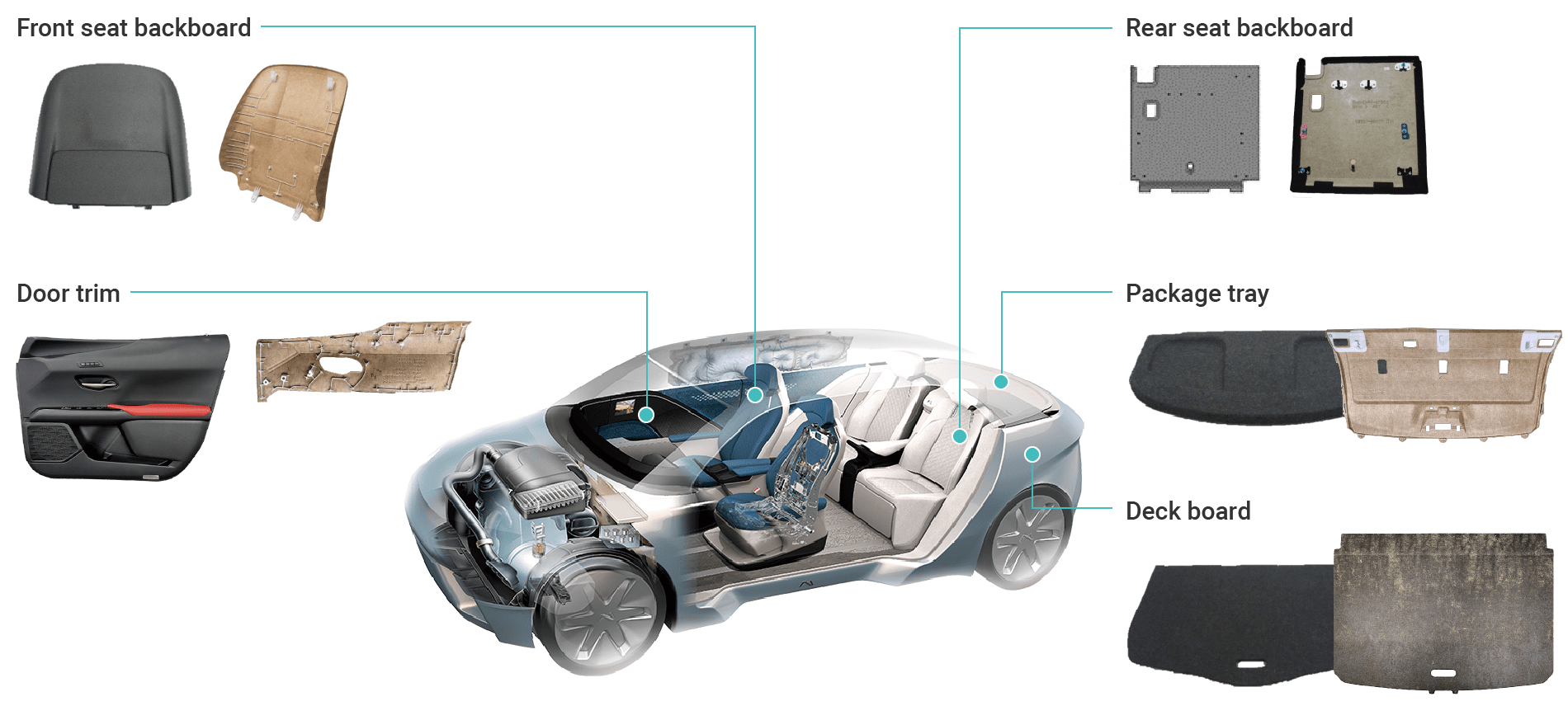
Automobile Interior Components Using Kenaf
Aiming to reduce greenhouse gas (GHG) emissions in the life cycle of automobiles, we are promoting the development of products using kenaf, which are widely used in automobile parts.
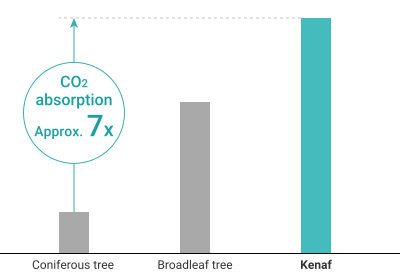
What is kenaf?
It is an annual plant that grows rapidly, reaching a height of 3 to 4 m and a stem diameter of 3 to 4 cm in about six months. It also has a high CO2 absorption capacity.
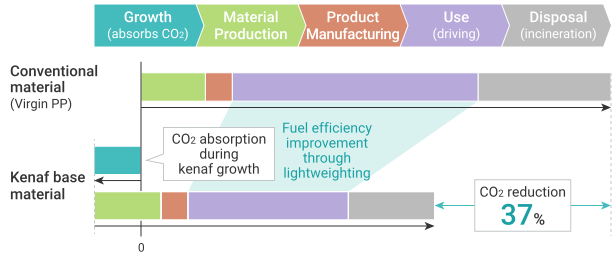
Life cycle GHG reduction benefits (from raw material production to disposal)
By replacing petroleum-based materials with plant-based materials for interior components and using kenaf, with its strong fiber, as a reinforcement material, it is possible to improve fuel efficiency (reduce CO2 emissions during driving) through lightweighting.
How Kenaf Products Are Made
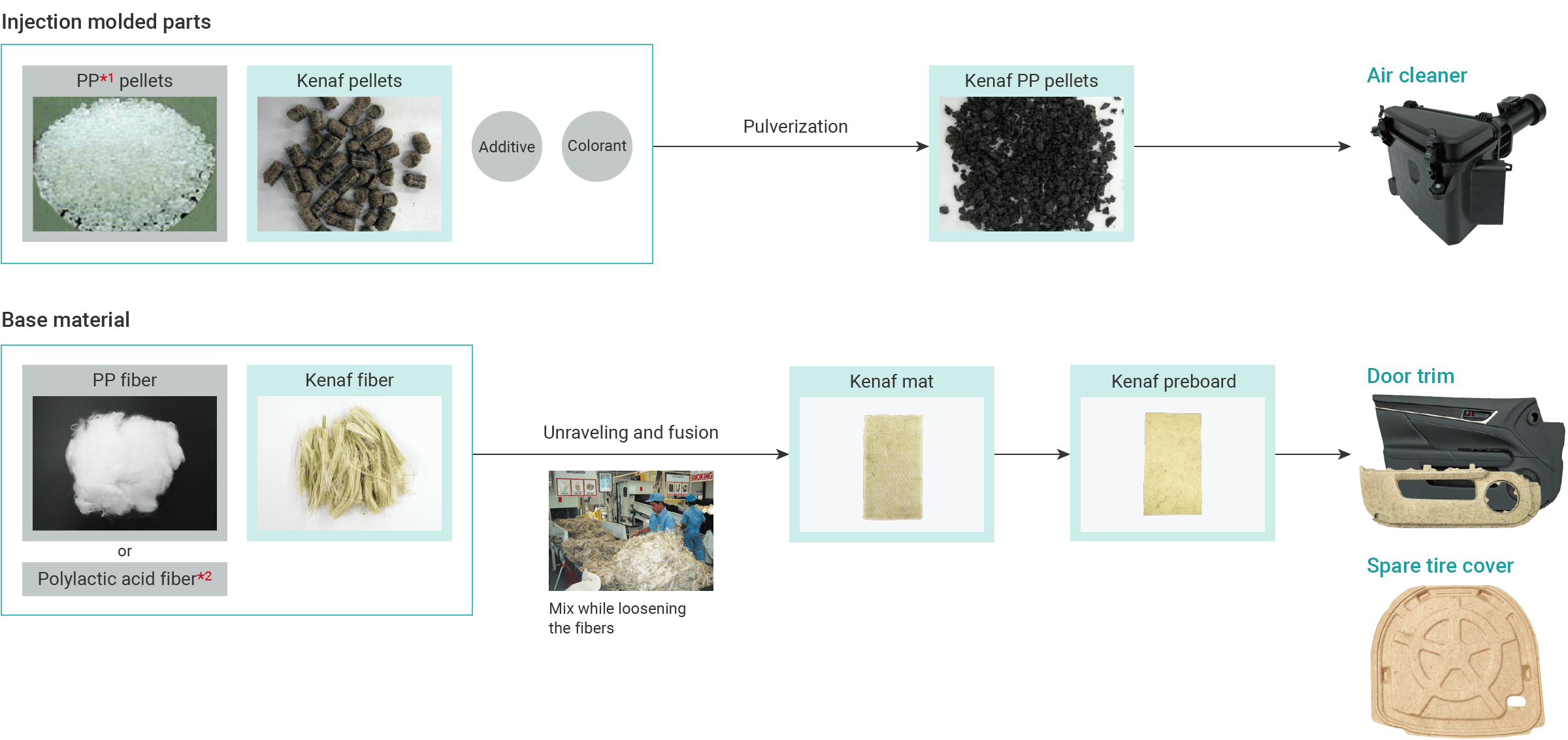
- Polypropylene.
- A plant-derived plastic made from lactic acid, which is produced by fermenting starch.
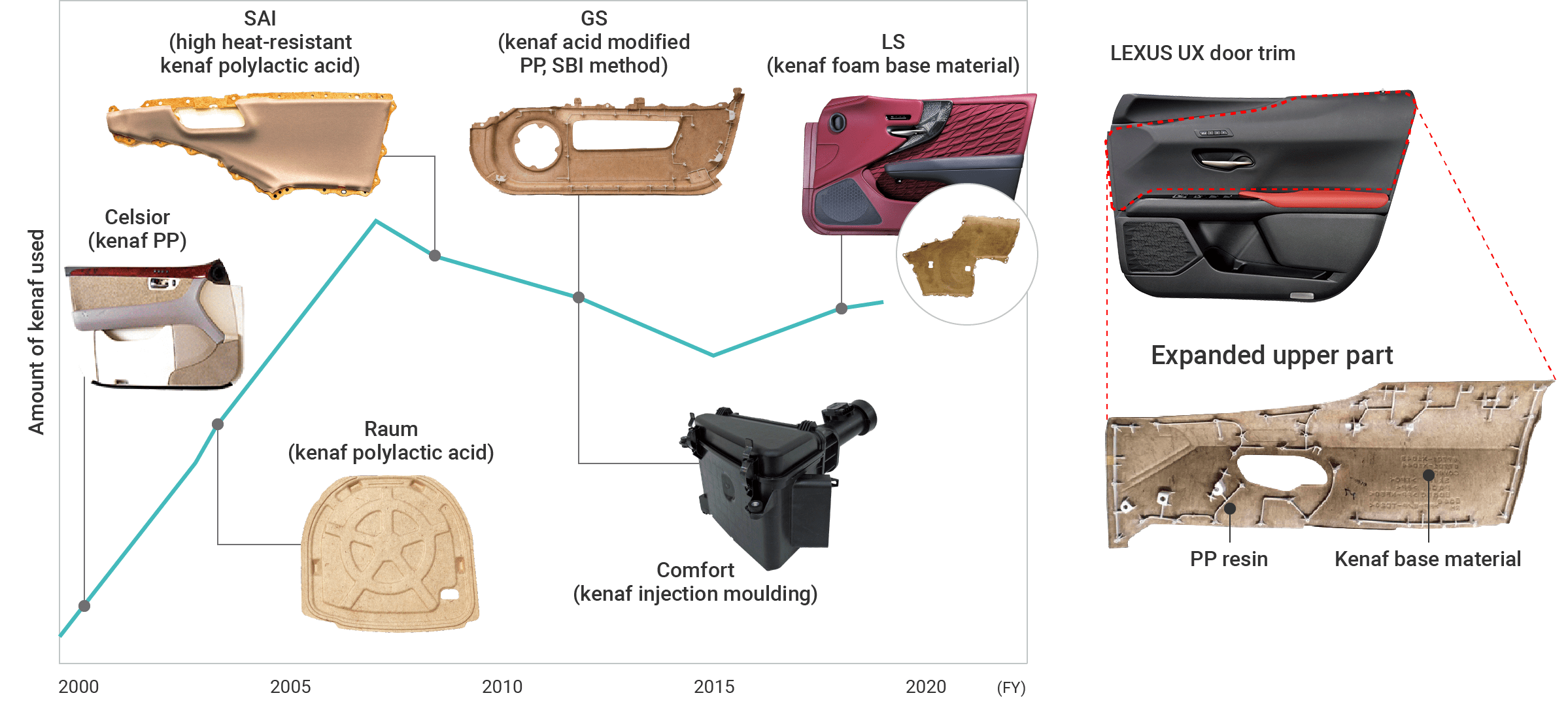
Sequential Commercialization of Kenaf Base Materials
Door trim base material using kenaf fiber was first utilized in the Celsior in 2000. Since then, Toyota Boshoku has advanced our technology and expanded usage. Examples include 100% plant-derived parts made from kenaf and polylactic acid, the Simultaneous Back Injection (SBI) method for injection molding of resin parts simultaneously with press molding of kenaf base material, and air cleaner cases made by injection molding using kenaf. Recently, kenaf foam base material, which is one of the world’s top-class lightweight base materials, is employed in the LEXUS LS. Furthermore, we are working to expand the product range by expanding the scope of application; such as utilization in the upper part of the LEXUS UX door trim.
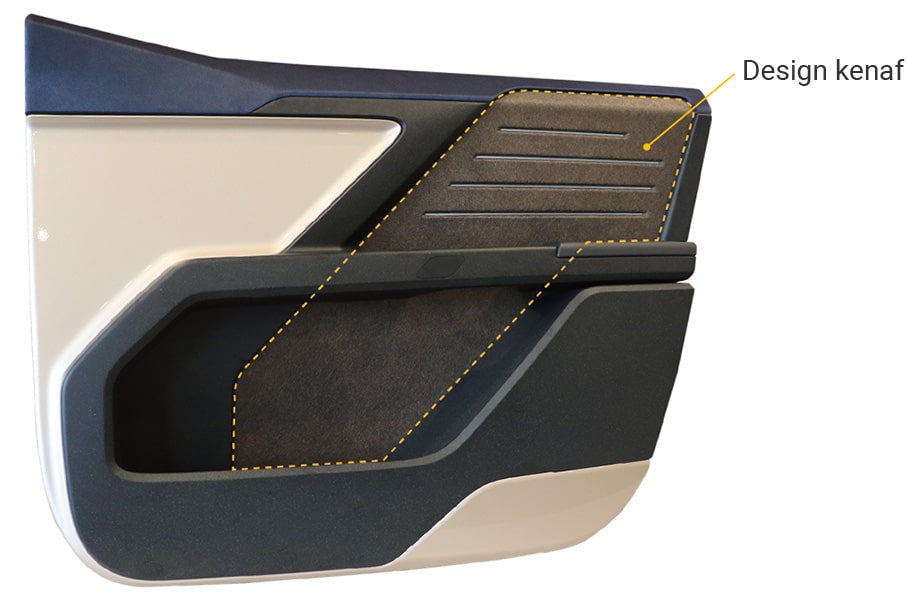
Examples of products made using kenaf
We have used kenaf, which can contribute to the reduction of CO2 emissions, as a base material, affixing, for example, a surface material to sections that are out of sight. Going forward, we will advance its applications for sustainability, working to realize a high-quality feel while retaining the fibrous texture of kenaf, for use in sections where the appearance or texture are important.
Utilizing Kenaf Base Materials for Products Other than Automobile Components
Kenaf processing expertise and technology developed over the years by Toyota Boshoku has been utilized in joint development with Itoki Corporation of a new line of office furniture products made using kenaf base materials. In the future we will continue making use of eco-friendly kenaf base materials to develop not only new automobile interior products, but also furniture, and all manner of other similarly more valuable products.


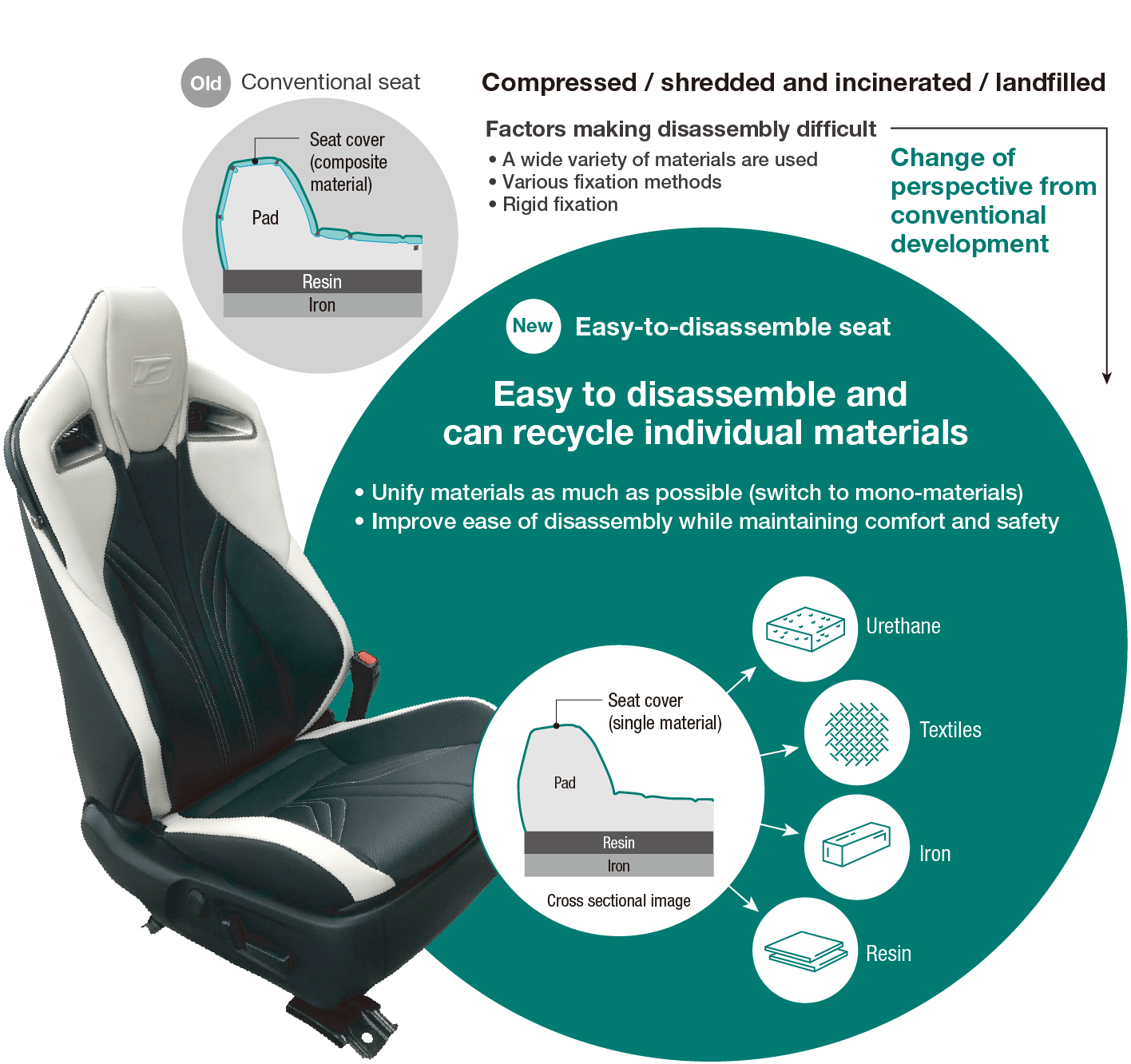
Creation of Easy-to-Disassemble Structures and Shift to Mono-Materials
Automobile seats are made from a combination of various materials to provide comfort and safety to customers. But the more materials that are used, the more difficult it becomes to disassemble each material effectively after use. As a result, currently, they are generally pressed and shredded together with the vehicle body. Much of the resulting automobile shredder residue (ASR)* is incinerated or landfilled.
In response to this issue, Toyota Boshoku is advancing mono-materialization, the use of a single material, and developing automotive seats that are easy-to-disassemble, with the aim of recycling used seats.
- ASR is the waste that remains after useful metals have been recovered
Initiatives Aimed at Use of Automotive Parts Made with Recycled Materials
We conducted quality assessment and development to gain acceptance under the Japanese Cabinet Office’s Strategic Innovation Promotion Program (SIP)* for automotive parts (lower door trim) made from recycled materials.
- The program, which is one part of the innovation policies being advanced by the Cabinet Office, particularly promotes the development of new technologies and services
Plastic Recycling Initiatives
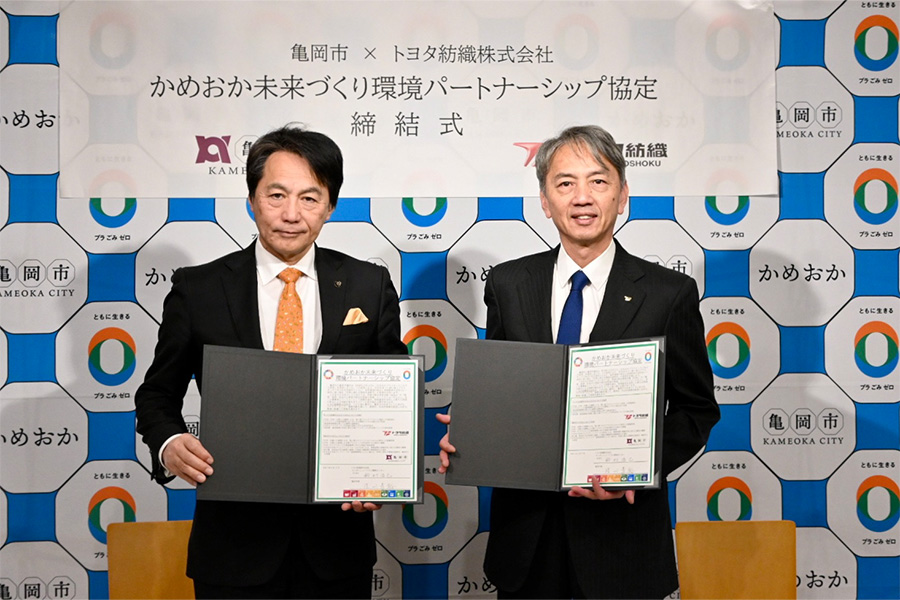
Toyota Boshoku entered into the Kameoka Future Creation Environmental Partnership Agreement with Kameoka City in Kyoto Prefecture. This agreement, aimed at the city’s achievement of the Sustainable Development Goals (SDGs), is based on a vision to promote integrated initiatives encompassing the three aspects of environment, economy, and society. Under the agreement, we will work in collaboration with Kameoka City towards the development of a sustainable city through new value creation utilizing local resources. Having entered into this agreement, Toyota Boshoku is now working with Kameoka on testing of technology to utilize waste plastic collected by the city to make automotive parts.