


Conservation and Regeneration of Natural Capital
Basic Approach
The Toyota Boshoku group is working to protect biodiversity with a focus on forestation based on the Toyota Boshoku Basic Policy of Biodiversity.
Since fiscal 2016, the Company has participated in the All Toyota Green Wave Project (in Japanese only)*, an activity being implemented by All Toyota Harmony with nature Working Group. The sphere of activities of the project has been expanded to include Toyota Boshoku group companies, local communities and government in an effort to promote forestation.
- Project aimed at creating a society that is in harmony with nature, implemented by the Toyota group since fiscal 2016
Certified under the “Nationally Certified Sustainably Managed Natural Sites” system by the Ministry of the Environment
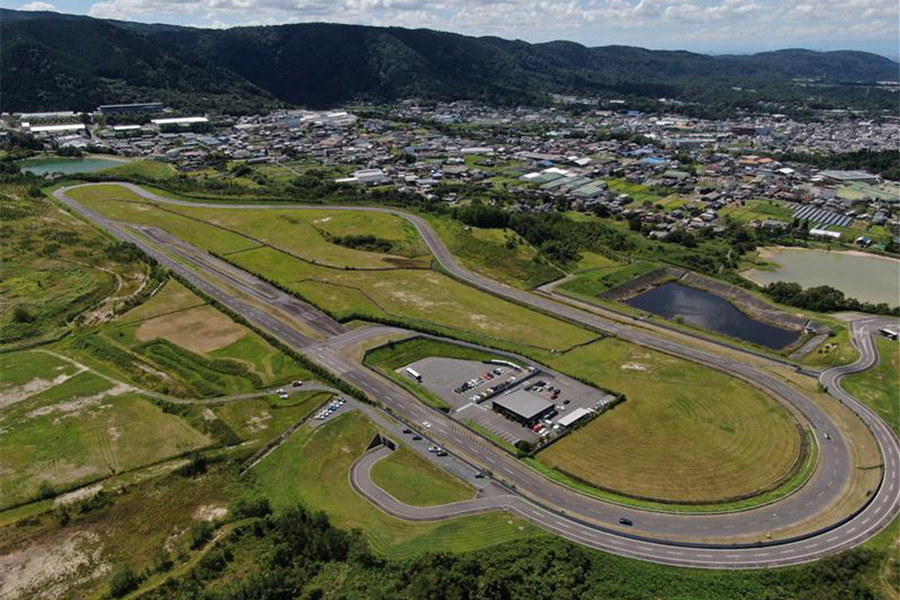
On October 21, 2024, Toyota Boshoku’s Tajimi Technical Center proving ground was certified as a biodiversity conservation area under Japan’s Ministry of the Environment’s “Nationally Certified Sustainably Managed Natural Sites*” system. This is the first certification for the Company.
Tajimi Technical Center proving ground is a test course facility owned by our company located in Tajimi City, Gifu Prefecture. Since its construction, the facility has been involved in steady soil improvement and greening activities, and the site has now been recognized as playing an important role as a habitat for species including scarce insects, which have been designated as Near Threatened species in the Japanese Red List compiled by the national and prefectural governments.
Toyota Boshoku group strives to reduce the negative impact on biodiversity throughout its business activities and contributes to the realization of a society that coexists with nature.
- A system operated by the national government that certifies areas where efforts are made to conserve biodiversity through private initiatives
Toyota Boshoku Group’s Forestation Activities
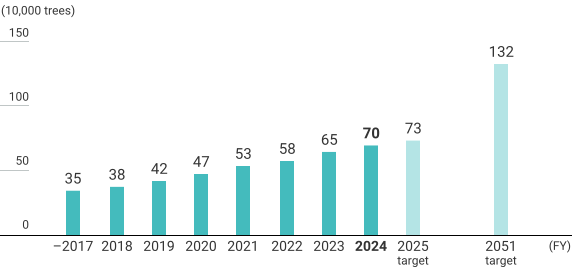
Toyota Boshoku group’s forestation activities have spread around the world and we are progressing towards our target of planting 1,320,000 trees by fiscal 2051.
In fiscal 2025, we planted 59,210 trees. The cumulative total number of trees planted was 760,000, far exceeding the target of 640,000 trees set in the 2025 Environmental Action Plan.
In fiscal 2026, we will continue to further promote reforestation activities.
Cumulative number of trees by fiscal 2051
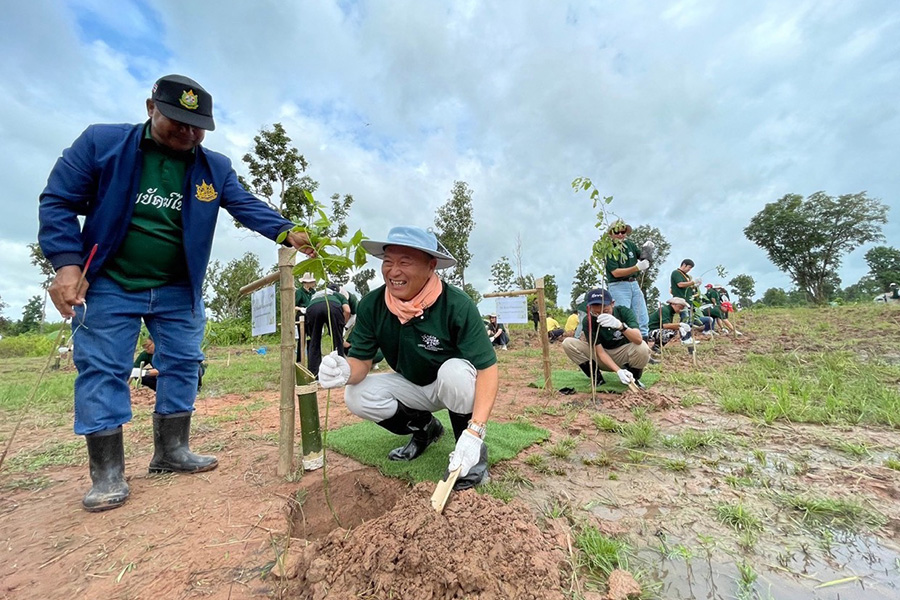
Tree planting activities in Thailand
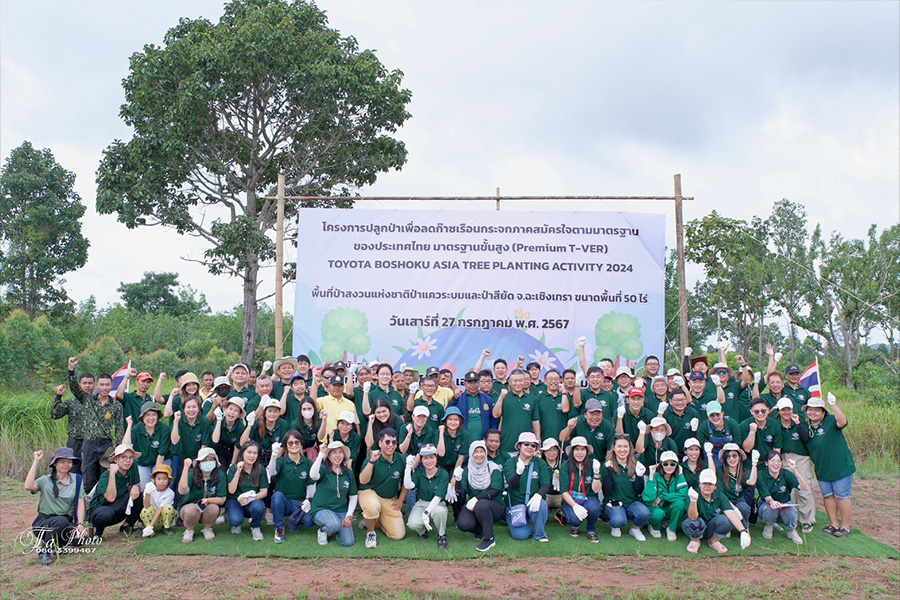
Toyota Boshoku Asia invited its company members, local residents, government officers, and Toyota Boshoku group members in Thailand, totaling 120 participants, who planted 1,000 trees in Chachoengsao Province.
The volume of greenhouse gas (GHG) emission reduction resulting from the tree planting will be recognized as “carbon credits.”
Going forward, we will continue to contribute towards the realization of carbon neutrality through tree planting activities.
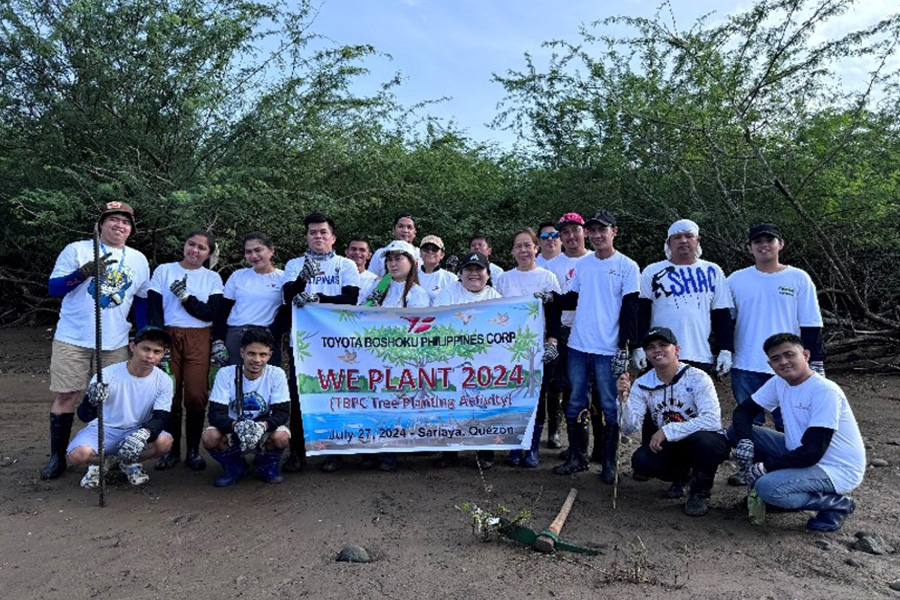
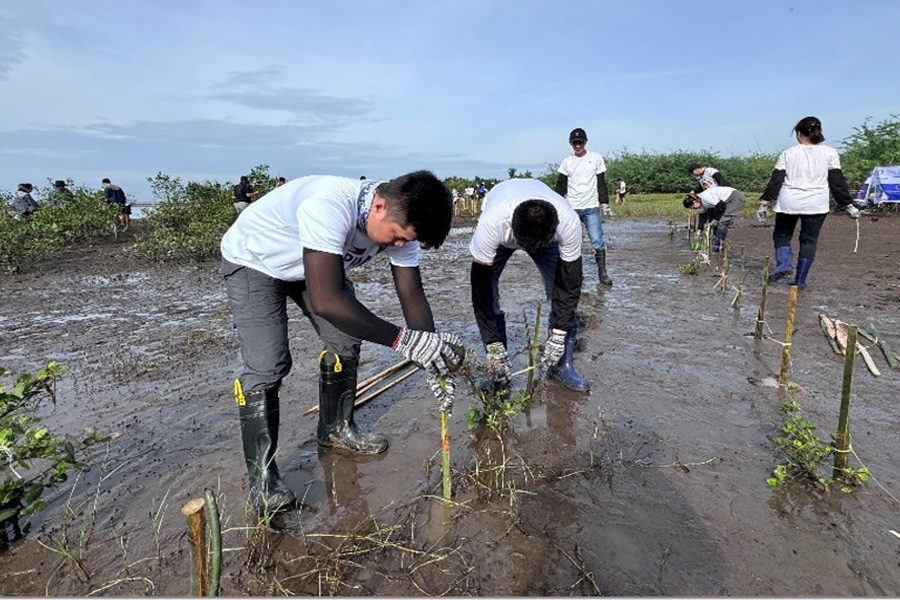
Tree planting to protect forests in the Philippines
Toyota Boshoku Philippines planted 790 mangroves in coastal areas. This will help to preserve water quality and prevent soil erosion, thereby maintaining a healthy ecosystem.
Activities to prevent desertification in China’s Inner Mongolia Autonomous Region
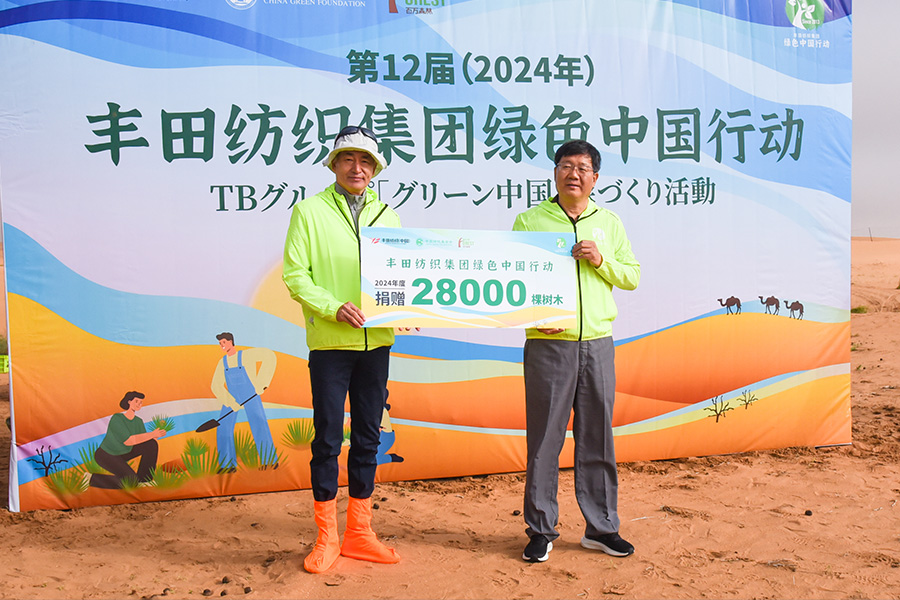
Toyota Boshoku (China) and Toyota Boshoku have been conducting tree planting activities in cooperation with the China Green Foundation, together with its sites and affiliated companies in the China region, with the aim of preventing desertification in China’s Inner Mongolia Autonomous Region.
In fiscal 2025, we planted 28,000 trees in an area of 14.5 hectares. To date, 182,000 trees have been planted, bringing the total area of trees planted to approximately 90 hectares.
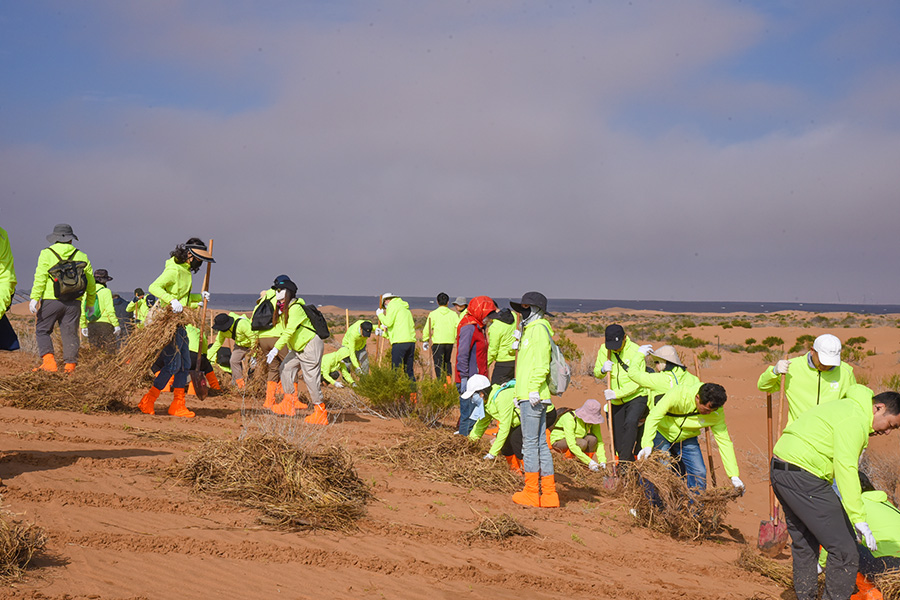
Carbon neutrality for GHG emissions from desertification prevention in China’s Inner Mongolia Autonomous Region
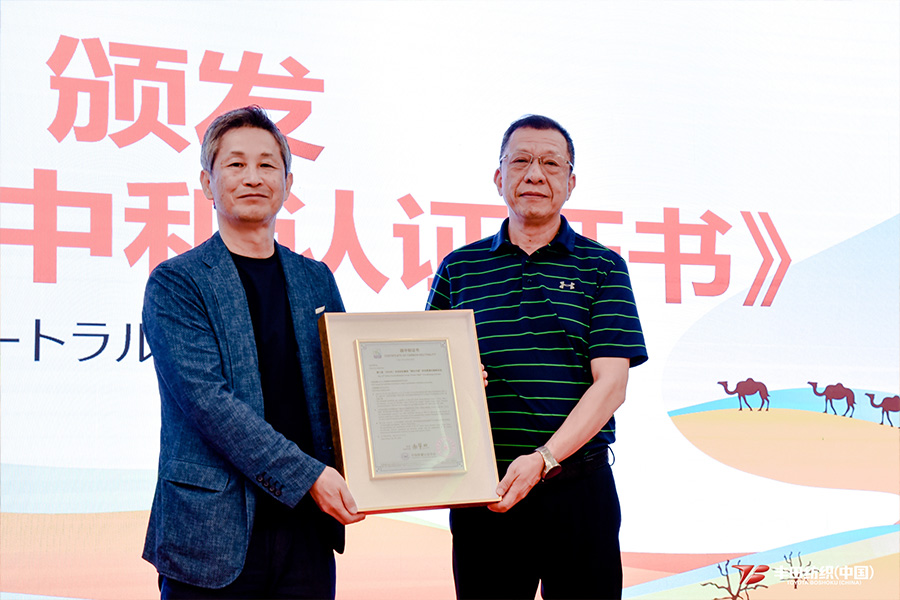
In fiscal 2025, Toyota Boshoku (China) calculated the volume of GHG emissions relating to its desertification prevention activities conducted in China’s Inner Mongolia Autonomous Region, using China’s “Guidelines for the Implementation of Carbon Neutrality in Large-scale Activities.” Based on the results, and with China Quality Certification Centre (CQC) inspection and certification, through the purchase of VCS 2083 (Liangdu Afforestation Project) forestry carbon credits from Liupanshui (Liangdu), Guizhou Province, China, we achieved carbon neutrality in GHG emissions from our desertification prevention activities in the Inner Mongolia Autonomous Region.
Bird Conservation Activities
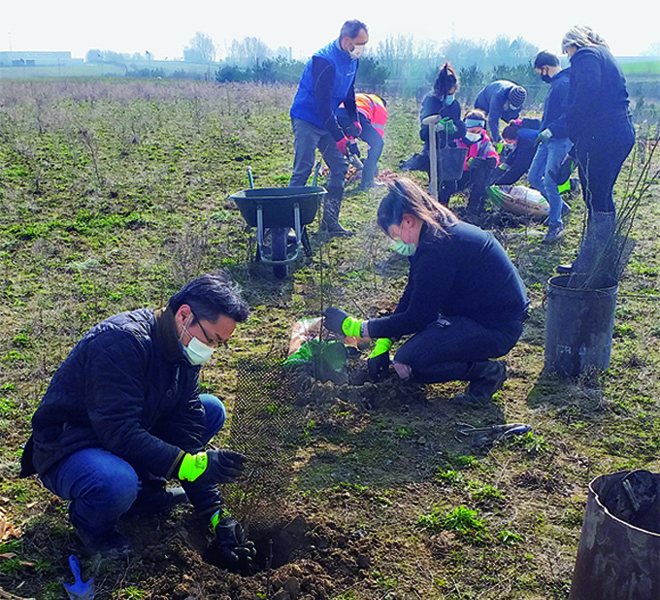
Toyota Boshoku France has worked together with environmental conservation groups to plant 500 shrubs throughout company sites.
This initiative is not merely designed to improve the views around company sites, but also to improve biodiversity in the areas. France's bird populations have declined by 30% in the past 15 years, and these shrubs can help reverse that trend by providing birds with both necessary food and habitats.
So-Shigi Project
Toyota Boshoku launched the “So-Shigi Project” to promote activities that contribute to the conservation of biodiversity. The word “shigi” in the project name means sandpiper in Japanese.
The project is engaged in various measures focused on cleaning tidal flats, where there is concern about the impact of microplastics, in order to protect the feeding grounds of coastal wildlife such as sandpipers.
The project’s logo is a redesign of the “So-Shigi” (two sandpipers) trademark, which was used on products that were widely exported outside Japan, primarily in Asia, when the company was first founded. The sandpiper is a migratory bird that flies to the tidal flats, and we adopted it as a fitting symbol of our new activities for preserving biodiversity.

Tidal Flat Conservation Activities
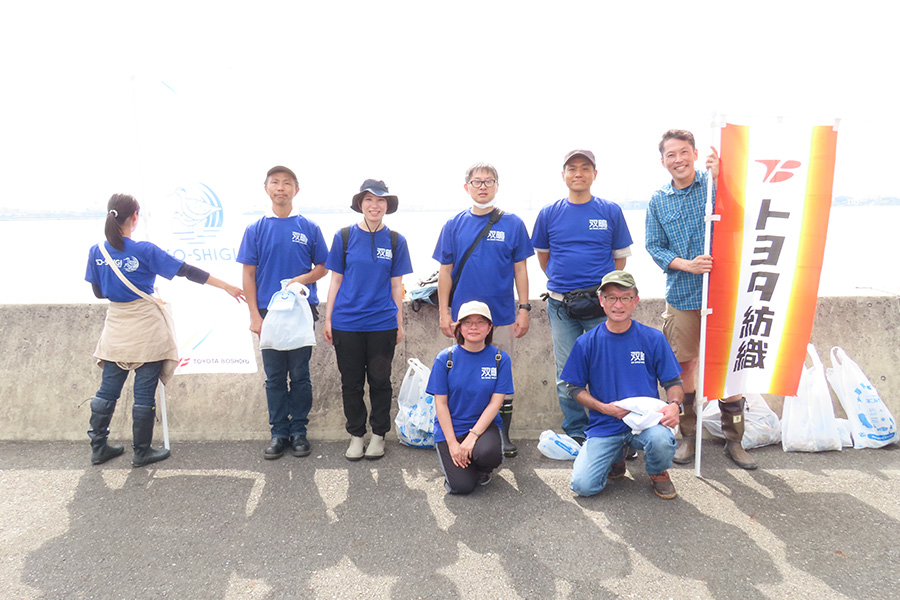
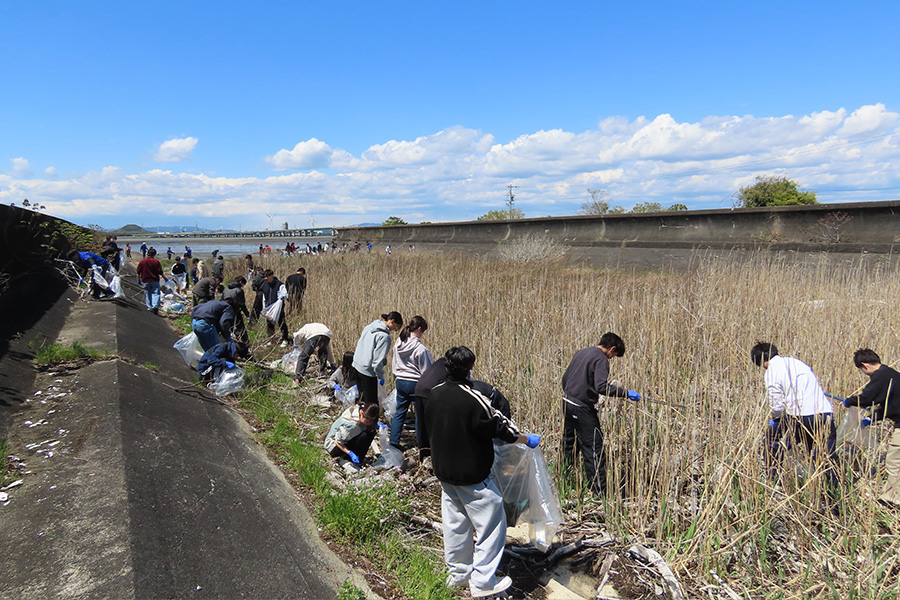
Every year, cleanup activities are conducted on tidal flats, aiming to raise environmental awareness and contribute to the local community by thinking about litter and water across the whole basin, through conservation of the wetlands, which are an important habitat for many living creatures.
In May and October 2024, we participated in the major cleanup at the Fujimae Tidal Flat, in Aichi Prefecture, a designated site under the Ramsar Convention on Wetlands, organized by the Fujimae Higata* Coastal Cleanup Campaign Executive Committee. As well as litter that has been washed ashore, we also cleaned up microplastics, which have become a major problem in recent years.
Also, in June and November 2024, as one facet of our So-Shigi Project, volunteer company members conducted a cleanup of the Shiokawa Tidal Flats on the inner side of the Mikawa Port Bridge in Toyohashi. In April 2025, new company members conducted a cleanup here as part of their orientation training.
- Tidal flat
Participation in the All Toyota Green Wave Project
Toyota Boshoku has been participating in the All Toyota Green Wave Project since fiscal 2016 with the aim of building a society that can live in harmony with nature.
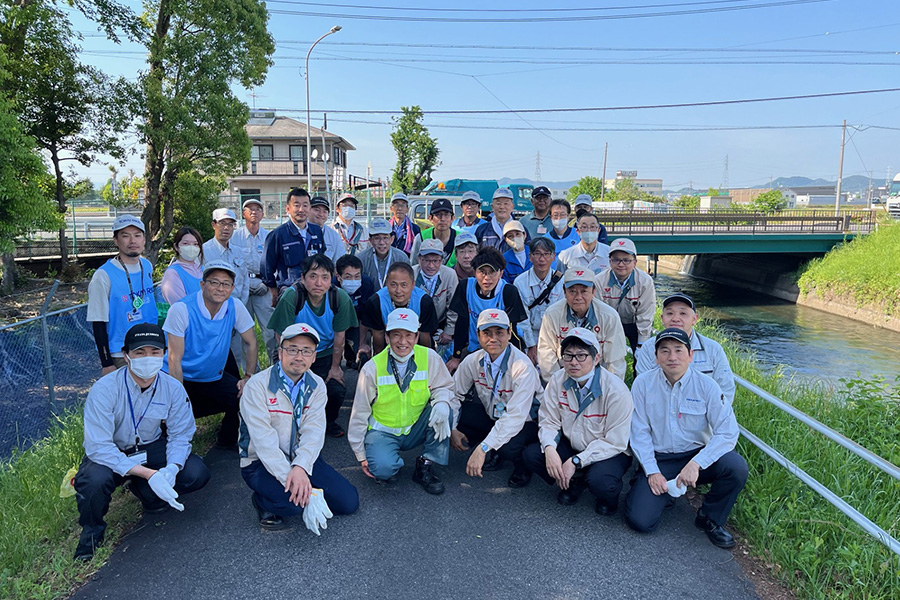
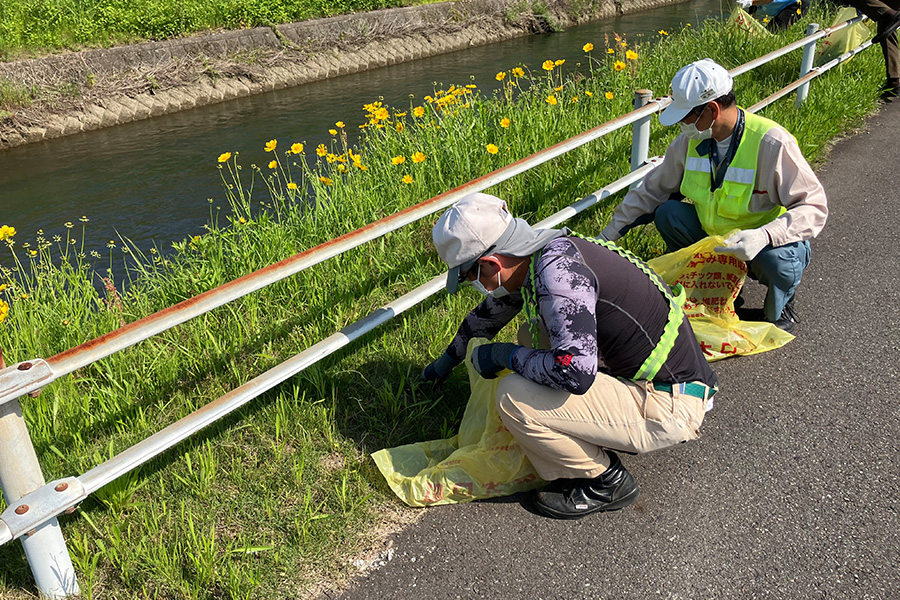
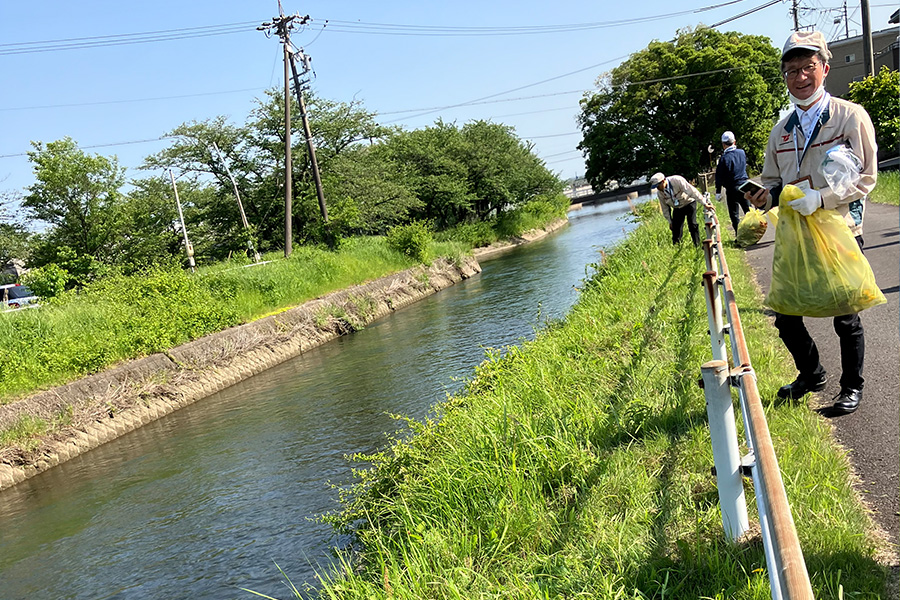
In May 2024, just as in fiscal 2024, we worked alongside local government and residents in planning action to eradicate the invasive flower species coreopsis lanceolata. Coreopsis lanceolata has been designated as an invasive species with a risk of causing severe negative impacts on ecosystems in Japan, due to its capacity to cause extinction of local species. In fiscal 2025, we will continue to participate in the activities of the All-Toyota Green Wave Project and maintain our efforts to conserve the ecosystems and biodiversity of regional areas.